


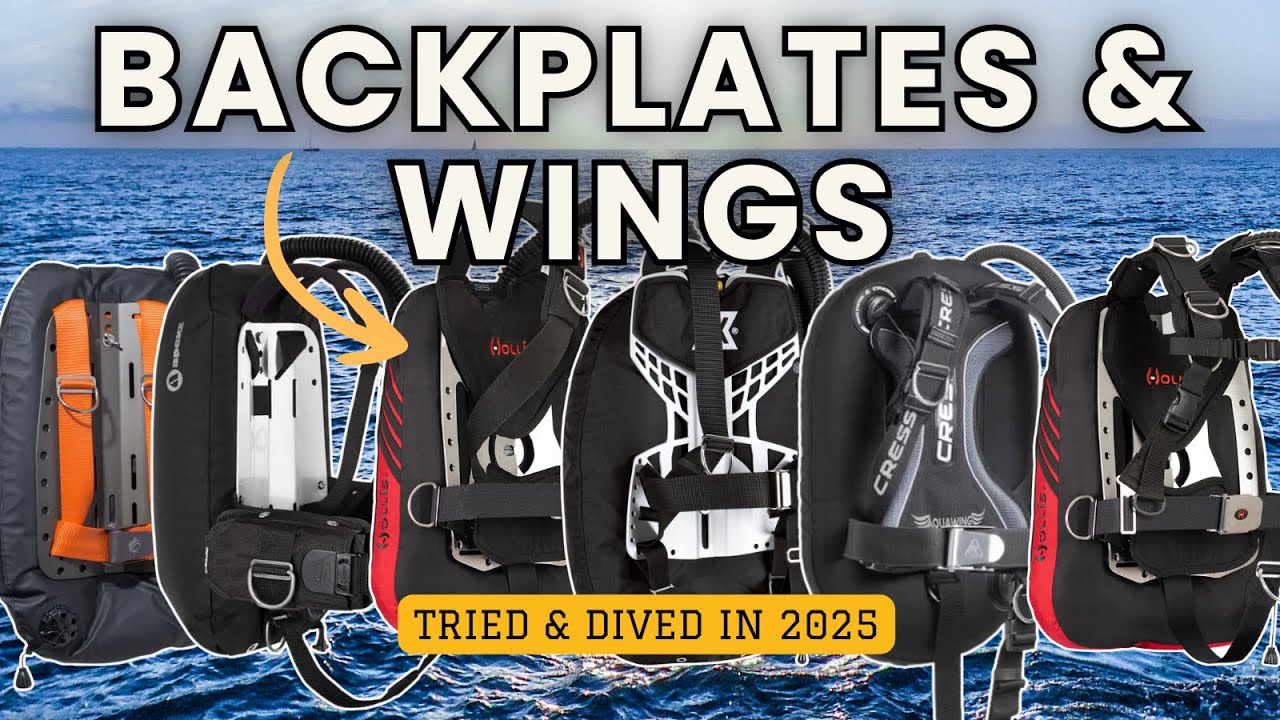


Backplate and wing systems offer a streamlined and highly customizable alternative to traditional BCDs, but not all setups deliver the same trim, stability, or comfort in the water. Differences in plate materials, wing shape, and harness configuration can significantly affect how a system performs, especially as your diving becomes more advanced.
At DIVEIN, our team of PADI-certified instructors has tested more than 16 backplate and wing systems over the past three years across ocean dives, pool sessions, and travel scenarios. Each setup was evaluated using consistent criteria, including underwater trim and balance, ease of adjustment, durability, and adaptability to different diving styles. Based on this hands-on testing, we selected the best backplate and wing systems for 2026 and break down what to look for, whether you are switching from a jacket BCD or upgrading your current setup.


How We Test Backplate and Wing Systems
Over the years, we’ve tested a wide range of backplate and wing setups in various diving environments from warm, tropical waters to colder, challenging conditions. Our team of experienced divers has worn these systems with single tanks, doubles, and a variety of wetsuits and drysuits to ensure a thorough evaluation.
We focus on real-world scenarios to test how these setups perform in actual dive conditions.
Additionally, we pay close attention to the build quality, materials, and modularity of each system.
We test how easy it is to adjust harnesses, disassemble the units for travel, and whether they provide reliable buoyancy and comfort during extended dives. We also check for durability by examining how well these systems hold up after repeated use, assembly, and disassembly.
Why Trust Our Testing?
Our team is made up of diving experts who have spent years exploring different types of diving. From recreational reef dives to technical wreck explorations. Leading the tests, Torben has decades of experience in dive gear testing, with a focus on gear that delivers both performance and reliability.
We rigorously test every piece of equipment we review, using it in real diving scenarios rather than controlled environments. This ensures that our recommendations are based on practical experience, not just specifications.
Backplate and Wing Buyer’s Guide
What type of backplate and wing is best for you?
When choosing a backplate and wing system (BPW), it’s essential to understand the different components and how they align with your diving style.
Unlike traditional BCDs, a BPW setup offers modularity and customization, which means you can adjust it based on your diving needs whether you’re a beginner or advancing into technical diving.
Let’s break down the key elements you need to consider: harness options, plates, wings, and lift capacity.
Harness Options
Backplate and wing systems come with two main types of harnesses:
Continuous webbing (DIR Style): This is the most durable and minimalist option, made from a single piece of 2-inch webbing. It’s ideal for technical diving due to its strength and lack of failure points (like buckles). The continuous design offers customization but requires more effort to adjust since it’s one long piece of fabric. It’s perfect for divers who want simplicity and reliability, especially when using heavy tanks or stage bottles.
Deluxe harness: For those transitioning from a jacket-style BCD, a deluxe harness offers more comfort, with padded shoulder straps, quick-release buckles, and adjustable D-rings. This is great for recreational divers who value convenience and ease of use but may not be as durable for heavy-duty technical dives.
Backplate Options
The backplate is the foundation of your system, providing support and weight distribution. There are several materials to choose from:
Stainless steel: Ideal for cold-water diving with thick exposure suits, as the added weight reduces the need for extra lead. It’s durable and great for divers who often carry heavy gear.
Aluminum: Lightweight and perfect for travel. It’s corrosion-resistant but can bend under heavy loads. Ideal for warm-water divers who need a lighter setup.
Carbon fiber and Delrin: These are the lightest options available. Carbon fiber plates are incredibly lightweight and durable but can be prone to scratches. Delrin plates, made from durable plastic, are corrosion-resistant and great for frequent travelers who want to minimize weight.
The choice of plate material largely depends on your dive environment. Cold-water divers may prefer stainless steel, while warm-water travelers might opt for aluminum or carbon fiber to keep their luggage light.
Wings and Lift Capacity
The wing is the buoyancy component of your setup, and it comes in different shapes and lift capacities:
Donut (Circular) wings: These provide even air distribution, making it easier to adjust buoyancy and trim. These are ideal for most divers, especially those new to backplate and wing systems.
Horseshoe wings: Air does not circulate fully around the bladder, which can make venting trickier. These are typically used for more specialized setups but can still be efficient with proper training.
Lift capacity: Choose a wing with the right lift for your needs. For single-tank recreational diving, a wing with 30 to 40 pounds (13.6 to 18 kg) of lift is usually sufficient. For cold-water or technical diving with doubles, a 50-60 lbs wing with 50 to 60 pounds (22.6 to 27 kg) of lift is recommended. Having extra lift can also be helpful in emergencies, such as assisting a dive buddy to the surface.
Single Tank Adapter and Tank Straps
Most wings for single tanks require a single tank adapter (STA) to stabilize the cylinder. STAs are typically flat, rectangular plates that attach directly to the backplate. They can be weighted or unweighted, helping balance your trim and reduce the need for extra lead. For those diving doubles, the backplate itself serves as the attachment point.
Final Thoughts on Choosing Your Backplate and Wing
A backplate and wing system is a versatile investment that can grow with your diving journey. Start with a basic setup for recreational diving and upgrade as you move into technical or cold-water diving. Modularity allows you to swap components, making it a cost-effective solution in the long run.
Whether you’re looking for simplicity, travel-friendliness, or a robust setup for technical dives, understanding each component will help you build a system that’s perfect for your diving adventures.
Backplate and Wings FAQs
Backplate and wing BCDs can be used by beginners, but they are less beginner-friendly than traditional jacket BCDs. They require initial setup and adjustment, which adds complexity for new divers. However, many divers who start with a backplate and wing benefit from better trim, stability, and a more streamlined profile from the beginning.
The main difference between a backplate and wing (BPW) and a jacket BCD is how buoyancy is distributed. A BPW places all buoyancy behind the diver using a wing attached to a rigid backplate, improving trim and horizontal positioning. A jacket BCD inflates around the torso, which feels more stable at the surface and is more familiar for beginners. BPWs are modular and durable, while jacket BCDs are more plug-and-play with built-in padding and pockets.
Backplate and wing systems can push you slightly forward at the surface if the wing is fully inflated. Because buoyancy is located behind you, it can tip your body forward. Proper weighting, trim, and controlled inflation reduce this effect, and most divers quickly adapt by leaning back slightly.
You can travel with a backplate and wing BCD, and many divers prefer them for their modular design. Aluminum or composite backplates are best for travel because they are lighter than steel. The system can also be disassembled to pack more easily, making it a practical option for dive trips.
The lift capacity you need in a wing depends on your diving conditions and gear. For warm-water diving, 20 to 30 lbs (9 to 14 kg) of lift is usually sufficient. Cold-water divers using thicker exposure protection often need 30 to 40+ lbs (14 to 18+ kg). Technical diving setups with double tanks require significantly more lift, typically 40 to 60 lbs (18 to 27 kg) or more.
Backplate and wing BCDs can have integrated weight pockets, but they are usually optional rather than standard. Many divers use trim pockets on the tank bands or backplate, or a traditional weight belt. The modular design allows you to customize your weight system for better balance and comfort.
A single tank adapter (STA) is a bracket that attaches a single scuba tank to a backplate and provides mounting points for tank bands. Some wings include built-in cam band slots, which eliminates the need for an STA. Whether you need one depends on your wing design and how much stability you want in your setup.
A steel backplate is better for divers who want built-in weight, especially in cold water or when using a drysuit. An aluminum backplate is lighter and better suited for travel and warm-water diving. The best choice depends on your diving environment and how you prefer to distribute weight.
 Take a moment to look at this.