
8 Best Scuba Drysuits in 2026 | Tested by Divers

Torben Lonne
By
Bradley Axmith
Senior Editor at DIVEIN.com
Bradley grew up feeling more at home in the national parks of Canada than in the city. Having an affinity for the seasons and a penchant...
Torben Lonne
Editor and Co-founder at DIVEIN.com
Torben traveled to South East Asia for scuba diving and never really stopped his search for new adventures. His affinity for gear that works and his...
Rebecca Strauss
Editor at DIVEIN.com
Rebecca has been an avid traveler and scuba diver for many years. She began her editorial career by updating travel guides, which took her all over...
Video preview

Scuba drysuits vary significantly in real-world performance, and not all models deliver the same warmth, flexibility, or durability in cold water conditions. Differences between neoprene, trilaminate, and crushed neoprene suits can have a major impact on insulation, mobility, and overall comfort, especially across repeated dives and extended exposure.

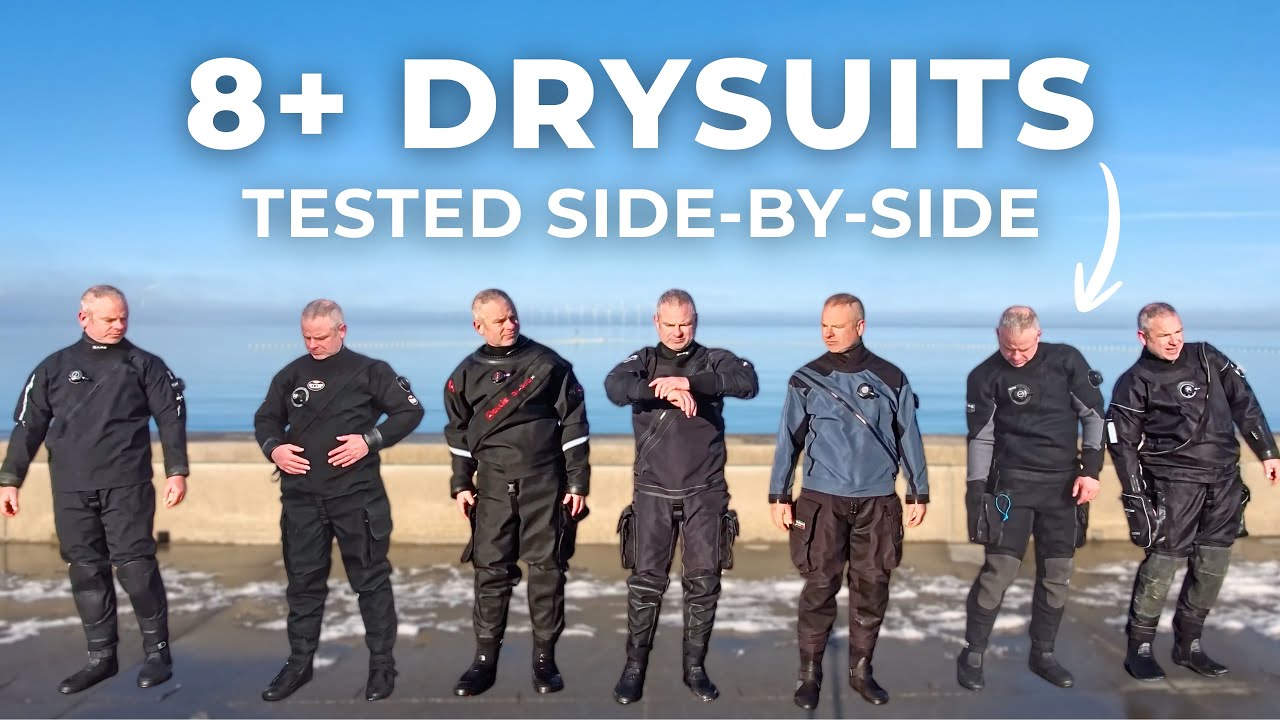
At DIVEIN, our team tested eight drysuits in water temperatures ranging from 39 to 59F (4 to 15C) across Northern Europe and the Pacific Northwest. Each suit was evaluated using consistent criteria, including warmth, flexibility, ease of entry and exit, seal quality, and performance over multiple dives on consecutive days. Based on this hands-on testing, we selected the best drysuits for 2026 and included a detailed buyer’s guide to help you choose the right option for your cold-water diving.

Newsletter Form (inline)

We’re giving away Scuba Gear!

At DIVEIN, we test new scuba gear weekly.
After testing, we’re giving most of the gear away to readers of our newsletter!
Join our newsletter to learn more:

You can always unsubscribe for free⎪

The Hollis DX-300X is an off-the-rack drysuit that stands out with a focus on diver comfort and a well thought-out design. Those who choose this suit can expect a mid-range price with a premium experience attached.

I found donning this suit almost pleasant, demanding the least amount of struggle compared to even neoprene options. I also found the least amount of resistance when swivelling my head during dives.

The combination of durable ripstop materials and features like the user-friendly Si-Tech Neck Tite and Quick Cuff systems, along with well-placed pockets, make it a strong contender for serious recreational and technical divers, though not necessarily in extremely cold waters. And, because it’s designed for expeditions and heavy use, it can be easily repaired while on a trip.

Although it lacks a bit in customization options and it’s an off-the-rack suit, the Hollis DX-300X still uses some of the most advanced patterns for the fabric, which makes it comfortable and one of the easiest suits to get on and off.

Things we like:

  • Exceptional donning experience due to the innovative YKK zipper placement
  • Excellent flexibility with patented BIAS cut and telescopic-torso design
  • Smart and simple pocket design with internal D-rings
  • High-quality ripstop materials with 300N tear strength
  • Industry-leading neck seal replacement system is super-easy to change
  • Lightweight-yet-robust construction
  • Exceptional portability and easy maintenance
  • Double-thickness knee pads for added protection

Things we don't like:

  • 5 mm neoprene socks may not be ideal for all divers
  • Missing rock boots as a standard feature
  • Price point may be a barrier
  • Neck seal design may expose neck to cold water

Specs & Features

MaterialOuter layer: heavy-duty nylon Cordura ripstop with 300N; Middle layer: 12-layer butyl mass; Inner liner: silk-weave polyester
Neck sealsSi-Tech Neck Tite with silicone seals
Wrist sealsSi-Tech Quick Cuff with silicone seals
FitOff-the-rack
Zip locationFront
Boots or socks5 mm neoprene socks
PocketsTwo large velcro bellows pockets with internal D-rings

Where to buy

The Fourth Element Argonaut 3.0 is a premium membrane drysuit, individually tailored using Fourth Element’s innovative BIOMAP measurement method to ensure an exceptional custom fit.

Specifically created for serious recreational and technical divers, this drysuit provides outstanding comfort enhanced by extensive customization options—from seals and boots to colors and fabric selections for specific needs (i.e. travel-friendly or extra-durable).

Though positioned at a higher price point, the Argonaut 3.0’s precise fit and robust build quality promise immediate returns in comfort, performance, and reliability, making it well worth consideration if its features align with your diving demands.

Things we like:

  • 100% Custom fit – making sure this suit will fit you exactly like it should
  • Articulated legs allow for a natural trim position, especially beneficial for divers with previous injuries or mobility concerns
  • Zipper placement reduces wear and tear near the valves
  • Waterproof dry glove system is easy to use and reliable
  • Multiple fabric options allow customization
  • Comfortable neck seal (neoprene option tested) enhances the overall fit
  • Tech boot options provide great traction and comfort
  • Durable design based on feedback from course directors who have seen the longevity of the Argonaut 2.0

Things we don't like:

  • Premium price point may be prohibitive for some divers
  • 12 Week Delivery

Specs & Features

MaterialNylon trilaminate, polyester trilaminate, or a hybrid nylon/polyester trilaminate
Neck sealsHD latex, neoprene (tested), or Si-Tech silicone
Wrist sealsMultiple options including latex, PSI, and Si-Tech QCP XL
FitFully custom
Zip locationCross-chest entry (right shoulder to left hip)
Boots or socksTech 2.5 mm compressed neoprene boot (tested); standard 4 mm neoprene boot, or neoprene sock
PocketsTwo 3.5L pockets with internal bungee loops, a slate sleeve, and external mini-pocket

The BARE X-Mission Evolution is a collaborative result between BARE’s design team and technical cave divers—one of those “made by divers, for divers” things.

We have had two suits for two testers. Torben has been diving the X-Mission in the warm waters of the Caribbean and Mediterranean, as well as the colder Baltic Sea. I’ve tested it extensively in the Baltic and in some quarry lakes with thick undergarments, and found the articulation outstanding thanks to BARE’s strategic use of multiple fabric panels.

Our two suits have proven invaluable, especially for underwater filming, highlighting their durability and excellent mobility—traits favored even by special operations personnel.

Available off-the-rack or custom-fit, the BARE X-Mission offers plentiful adjustment options for optimal movement, making it one of the best drysuits to use in almost any conditions. It’s a premium investment, ideal for serious divers who demand reliability.

Things we like:

  • Advanced material construction with bias-cut panels for superior articulation/flexibility
  • Comprehensive technical pocket system with bungee organization
  • Innovative seam construction for enhanced durability
  • Smart Collar design with vented neck drain
  • Removable inflator-valve padding system
  • Field-replaceable suspenders and crotch strap

Things we don't like:

  • Neoprene wrist seals seem less than reliable

Specs & Features

MaterialNylon Micro RipStop trilaminate
Neck sealsNeoprene or latex
Wrist sealsNeoprene, latex, or silicone
Zip locationFront-entry with lightweight low-profile plastic dry zipper
BootsTech boots included
PocketsTwo expandable pockets with zipper on flap and five bungee cords

The Northern Diver HID was my first drysuit. As a membrane suit, it stands out in the market as a robust, value-oriented option that prioritizes durability over lightweight construction. Its quality makes you wonder how this membrane suit can cost under $1,100.

While premium trilaminate suits from competitors offer more refined features and lighter materials, the HID has some features worth celebrating. One of the best pockets we’ve seen and a standard strap to keep a dive computer in place are just two of them.

It’s not the most travel-friendly suit I’ve tried, but I still like diving in it, even while I can choose from other, more expensive options.

For commercial and technical divers prioritizing reliability over lightweight performance, the HID represents an excellent value proposition.

Things we like:

  • Standard dive computer strap
  • Best pocket of all suits tested
  • Great protection against abrasion and punctures
  • Secure and accessible storage solutions with multiple specialized pockets
  • Comprehensive included accessories package
  • Excellent value for money in its category
  • Nice low profile V-Tech valves

Things we don't like:

  • Heavier construction may impact travel convenience
  • Metal zipper requires frequent maintenance with waxing
  • Bulkier profile compared to recreational suits

Specs & Features

MaterialBlack Aquatex trilaminate
Neck sealsNeoprene
Wrist sealsSilicone or latex
WeightNot specified
FitOff-the-rack (S to XXXL) and made-to-measure
Zip locationFront-entry BDM metal zip
Boots or socksAttached boots

Where to buy

The BARE Aqua-Trek 1 Tech is a lightweight membrane drysuit in the entry-level category due to its simplicity and travel-friendliness.

At around $1,500, it’s an excellent first trilaminate suit. Although it lacks the extensive features and durability of top-tier technical suits, its lightweight design and included Ultra Warmth Base Layers make it ideal for recreational divers seeking portability and ease-of-use.

For casual diving in colder conditions, it’s an accessible, no-fuss option.

Things we like:

  • Excellent value for entry-level divers
  • Remarkably lightweight and travel-friendly design
  • Simple, straightforward construction
  • Included base layers are great
  • M-PADz knee protection for durability
  • Anatomical shaping provides good mobility
  • Low-profile plastic zipper reduces weight

Things we don't like:

  • No external pockets included
  • Limited seal customization options
  • Not as useful for technical diving
  • Off-the-rack sizing may require compromises

Specs & Features

MaterialCORDURA Nylon Oxford 4-Layer fabric
Neck sealsNeoprene seal with 2 mm nylon/smoothskin "Smart Collar"
Wrist sealsLatex bottleneck wrist seals
WeightLightweight (specific weight not provided by manufacturer)
FitOff-the-rack sizing with anatomically shaped torso, arms, and legs
Zip locationFront entry with lightweight, low-profile plastic dry zipper
BootsBARE Tech Boots included
PocketsNone
Additional featuresM-PADz knee protection, elastic back waist

Where to buy

The Cressi Desert occupies the lower end of the drysuit price range at around $1300. It’s a no-frills neoprene design for recreational divers seeking to extend their season or transition to dry diving.

It’s not intended for demanding tech or cave environments and there are only six off-the-rack sizes available, but it checks a lot of boxes if you fit one of the off-the-rack sizes.

Despite its budget-level positioning, it demonstrates a really solid and comfortable entry-level suit, quite capable of doing a great job for cold-water diving.

Things we like:

  • Very warm in cold water—with proper undergarments, 44 F (7 C) dives are comfortable
  • Entry-level price with serious performance
  • 4 mm crushed neoprene offers better control underwater and reduces excess air in the suit
  • Large thigh pocket with stretch material and a quick-access sleeve
  • Good abrasion protection with reinforced knees and front shins
  • Excess shoulder volume allows for top undergarments
  • Neoprene socks are warm and easy to pair with rock boots

Things we don't like:

  • Only six sizes available (S to 3XL) with no short, tall, or custom options
  • Rear BDM zip is nearly impossible to close alone
  • Rock boots look great, but the laces are a hassle, especially when cold or wearing gloves
  • Some bagginess in the upper body when topside

Specs & Features

Material4mm high-density crushed neoprene
Neck sealsNeoprene
Wrist sealsNeoprene
FitS to 3XL (no tall/short/custom)
Zip locationRear-entry BDM
BootsNeoprene socks plus Malmo rock boots (lace-up)
PocketsOne neoprene pocket on right thigh

Where to buy

I’ve been using the Otter Britannic Mk2 drysuit during winter dives in the Baltic, and even in near-freezing open water, it felt like a suit built for tough environments like wrecks and caves.

The full-coverage rugged trilaminate adds noticeable weight, but also serious durability. My suit is a bespoke version—custom sizing only adds $200 (£160)—and with full options, the price came to about $2,800. That includes latex seals with neoprene gaiters, rock boots (which I ended up really liking), and full Armour Skin coverage—not just on high-wear areas.

There are no complaints on the fit and range of motion. Decent ease in the fabric is appreciated when I get in and out of my suit. While the front-entry BDM metal zipper works, I find it less enjoyable than plastic alternatives.

Overall, it feels like a well-made suit that should hold up to years of use. Turnaround for made-to-measure is about 6–8 weeks, thanks to Otter being a reliable but small, UK outfit.

Things we like:

  • Single-craftsperson construction ensures consistent quality
  • Telescopic design for easier donning and doffing
  • Excellent seal comfort at neck and wrists
  • Relatively lightweight
  • Reliable pressure testing for every suit
  • Comfortable sock feet with three included boot options
  • Good value for money considering the craftsmanship

Things we don't like:

  • Front-entry metal zipper

Specs & Features

MaterialTrilaminate
Neck seals Neoprene
Wrist sealsDry glove options, neoprene, latex seals
WeightLightweight construction
FitSemi-custom with telescopic body design
Zip locationFront-entry heavy-duty double zip with protective cover
BootsFlexible sock feet with choice of boot (three options)
PocketsOne knife pocket and one standard pocket with brass D-rings

Where to buy

The BARE Sentry Tech Drysuit was my first experience with a neoprene drysuit, and it immediately felt familiar—like slipping into a well-loved semi-dry. It’s warm, flexible, and forgiving in the water, making it a solid pick for dives below 60 F (15 C).

At around $3,000, it’s definitely a premium option, but it offers serious thermal protection without stacking on layers. With the right custom options—and even off-the-rack, thanks to the wide size range—the Sentry Tech stands out as one of the best neoprene drysuits I’ve used for cold-water diving.

For divers who choose the bespoke option like me—or select an accurate size from the impressively broad off-the-rack size range—the Sentry Tech stands out as one of the best neoprene drysuit solutions for serious cold-water diving.

Things we like:

  • Great thermal protection from neoprene
  • Little loss in protection thanks to the hyper-compressed Yamamoto technology
  • ATX system ditches the unpleasant crotch strap
  • No-Stitch Technology (NST) eliminates traditional seam vulnerabilities
  • Easy donning and doffing with flexibility and easy zipper
  • Protective outer layer enhances durability
  • Minimal undergarment requirements for cold-water diving
  • Available in both custom and standard sizes

Things we don't like:

  • Spectrum of temperature adjustment not as wide as membrane suits
  • Some resistance during specific fin movements
  • Neoprene wrist seal durability concerns
  • Less travel-friendly than membrane suits

Specs & Features

Material7mm hyper-compressed neoprene
Neck sealsNeoprene
Wrist sealsLatex bottleneck design
FitBoth off-the-rack and custom options
Zip locationSingle front-entry
BootsIntegrated boots
PocketsStrategically placed tech pockets with protective design

How We Tested

We tested drysuits in a range of real diving conditions—from freezing quarries to warm Mediterranean waters. Our team included Torben and Sylvia, both instructors, and Bradley, a divemaster—with over 5,000 dives between them. Each brought years of drysuit experience to the table.

We selected eight drysuits specifically for comparison and evaluated them for seal type, valve performance, material flexibility, and thermal protection in water below 46 F (8 C). To ensure fairness, all suits were dived with the same undergarments to assess true thermal efficiency across different materials and fits.

We also tested donning and doffing consecutively, noting zipper placement and entry design for ease of use. Zippers were opened and closed repeatedly to check stiffness, smoothness, and wear. Seal systems were stretched, pulled, and monitored over time for signs of damage or fatigue.

These real-world dives revealed what truly matters when choosing and diving a drysuit.

Ultimate Drysuit Buyer’s Guide

Everything you need to know before buying your first (or next) drysuit

Whether you’re diving icy quarries, exploring wrecks, or planning long dives in warm water, a drysuit offers unmatched comfort and protection. But choosing one isn’t just about brand or color. It’s about the right material, the right fit, and knowing what features actually matter. This guide covers everything you need to understand before you buy.

Front view of the BARE X-Mission Evolution following a shore dive

Why choose a drysuit?

Drysuits keep water out entirely, using air and thermal layers for insulation. Compared to wetsuits, they’re warmer, more versatile, and much more comfortable during long or repeated dives. Even in 80 F (27 C) water, your body will eventually get cold without insulation. Drysuits offer a dry, warm option—even post-dive.

Before buying, be prepared to decide on:

  • Seals: silicone, latex, or neoprene
  • Boots: integrated or socks with separate boots
  • Color: some brands offer custom color options
  • Valves: type, location, and orientation
  • Pockets: one or two, removable or fixed
  • Fabric: trilaminate, neoprene, or hybrids

Each of these choices can affect comfort, performance, and price.

Trilaminate vs. neoprene

This is the first major decision when buying a drysuit, and it refers to the construction of the suit itself. Both trilaminate and neoprene have pros and cons.

Trilaminate (trilam):

  • Lightweight and fast-drying
  • Offers no insulation—this is provided by undergarments
  • Easier to travel with
  • Stiff—needs a looser fit to allow movement

Neoprene:

  • Built-in insulation
  • Stretchier, more forgiving fit
  • Heavier and slower to dry
  • May require you to carry more weight due to buoyancy

The Cressi Desert is a good example of an affordable neoprene suit ($1300 range) that offers warmth and simplicity, but fewer size options and less travel-friendly bulk.

The BARE X-Mission Evolution, tested extensively in both tropical and cold quarry conditions, showcases what a premium trilam suit can do: lightweight, travel-ready, and adaptable to a variety of undergarments.

Fit is everything

A proper fit determines comfort, warmth, and safety. If the suit is too tight, mobility suffers—if it’s too loose, buoyancy control becomes difficult. Most suits don’t require full custom fitting thanks to manufacturers offering multiple off-the-rack sizes.

Fit tips:

  • Always measure with intended undergarments in mind
  • trilam suits require extra room for movement
  • Slightly oversized is usually fine—too small is not
  • Some brands offer 14+ size options, others only 6–8
The pockets on the X-Mission Evolution are roomy without getting in the way.

Seal types: neck and wrist

Choosing the right seal type is a comfort and performance decision:

  • Silicone: Soft, stretchy, and easily replaceable; requires a modular system
  • Latex: Tight and durable, but less stretchy; more affordable
  • Neoprene: Warmest option, but may not seal perfectly on all body types

Silicone is the most user-friendly and popular option today. Neoprene offers extra warmth in cold water. Latex remains a solid, cost-effective standard.

Boots and gloves

Boots:

  • Integrated boots: Easy to use, no forgetting gear
  • Socks + rock boots: Better grip and durability on rocky or uneven terrain

If most of your diving is shore-based or on rough surfaces, go with separate rock boots. For boat diving or warm water, built-in boots may be simpler.

Dry gloves:

  • Keep hands warmer, longer
  • Require inner liners (bring spares of both liners and outer gloves)
  • Use thumb loops or small air channels to equalize pressure

Dry gloves are especially helpful when diving in temperatures below 50 F (10 C)

Walking in the BARE Flex boots in a Sentry Tech

Zippers: Entry style, materials, and brands

Drysuit zippers are one of the most important components for staying dry—and one of the most expensive parts to replace.

Entry style: front vs. back zip

  • Front-entry: Allows self-donning. Includes a telescoping torso to help you bend and get in. More convenient for travel and solo diving.
  • Back-entry: Requires a buddy to zip you up. Offers a more fitted cut, with fewer panels and a slightly more streamlined profile.

Zipper materials: plastic vs. metal

  • Plastic (polyurethane-coated): Flexible, low-maintenance, and easier to operate with cold hands. Doesn’t corrode.
  • Metal (typically brass): Durable but stiff. Needs regular waxing and careful handling.

Common zipper brands

  • YKK Aquaseal® (plastic): Lightweight, smooth, widely used. Re-engages easily if pulled open under stress.
  • BDM (metal): Brass, rugged, requires regular waxing. Found in commercial/military suits.
  • TiZip: German brand, flexible and high-quality, common in breathable suits

Pro Tip: Always close the zipper fully. A small gap will result in major leaks. Add an extra tug to make sure it’s sealed

Easy and flexible zippers on the BARE X-Mission Evolution

Valves

Valves regulate the flow of air in and out of your drysuit, and their reliability and placement matters. They allow you to add or release air and maintain proper buoyancy, which is crucial when diving in strong currents or at greater depths.

Inflation valves: Typically mounted on the chest. Most include a swiveling quick-connect for your low-pressure hose.

Exhaust valves: Usually on the left upper arm. Adjustable valves allow you to set the auto-dump pressure.

Brands:

  • Si-Tech: Most common and known for durability and simple maintenance
  • Apeks: Also common, though some newer models are transitioning out of production

A good valve setup allows precise buoyancy control, easier descents, and safe ascents. Divers should ensure the placement fits their reach and body type

Undergarments

Your suit keeps you dry. The undergarments keep you warm.

  • Fleece styles offer streamlined warmth and are great for layering
  • Lofted undergarments offer high insulation but increase buoyancy and bulk
  • Avoid cotton—go for moisture-wicking synthetic materials
  • Layering is key for adapting to different water temperatures

Diving in water below 50 F (10 C)? Plan for thicker loft or multi-layer systems. Diving in the tropics with a drysuit? Thin fleece may be enough.

There’s good freedom of movement with room for undergarments on the Northern Diver HID.

Valves, pockets, and accessories

Valves: Most suits come with Si-Tech or Apeks valves. Both are reliable; Si-Tech is more common.

Pockets: One or two thigh pockets are useful for backup gear, wet notes, or emergency items.

Knee pads: Add durability for shore divers or rugged entries

P-valves: Optional, but essential for long dives. Available for all genders.

Hoods: Dry hoods or high-neck thermal layers can dramatically improve warmth in cold conditions.

Apeks valves shown on the pretty cool Otter Britannic Mk2

Maintenance and repairs

Most common failure points:

  • Seals: Replace every one to five years depending on use
  • Zippers: Keep clean and lubricated
  • Abrasion zones: Knees, crotch, and shoulders can wear down over time

Store your suit loosely folded (do not hang long-term) in a dry, cool place away from UV light. Let it dry completely before storing.

Budget: how much should you spend?

  • $1,300–$1,800: Basic neoprene suits like the Cressi Desert
  • $2,000–$2,500: Mid-range trilams with essential modular features
  • $3,000+: Premium suits with custom sizing, breathable fabrics, and advanced features like the Fourth Element Argonaut 3.0

Closeouts and overstock models can save hundreds, especially if you’re flexible on brand or color.

A well-fitted suit is key to a good drysuit diving experience.

What actually matters

  • Fit: Always prioritize comfort, mobility, and room for insulation
  • Material: Trilam is lighter and more customizable; neoprene is warmer and more rugged
  • Undergarments: Match them to your dive conditions
  • Seals: Silicone for convenience, neoprene for warmth, latex for value
  • Boots/Gloves: Match terrain and water temperatures

Zippers: Plastic is now the preferred standard

Need help choosing?

It’s easy to get overwhelmed by the options. Get personal help from drysuit experts who match hundreds of divers every month.

DIVEN.com readers get a free premium warranty from Dive Right In Scuba when buying a suit through our partner program—covering seal and puncture repairs for the life of the suit.

Fill out the form on DIVEIN.com and start the process today.


Drysuit FAQs

What is the difference between a neoprene and a trilaminate drysuit?

Neoprene drysuits offer built-in insulation and are naturally warmer, making them a strong choice for cold water diving. Trilaminate drysuits have little insulation and rely on undergarments, but they are lighter, more flexible, and easier to dry and travel with. Most technical divers prefer trilaminate for versatility.

How much does a good drysuit cost?

A good drysuit usually costs between $1,000 and $3,500 depending on materials and features. Entry-level trilaminate suits are more affordable, while premium or custom-fit suits cost more. You should also factor in undergarments and maintenance.

Do I need drysuit training before diving dry?

Yes, drysuit training is recommended and often required. It teaches key skills like buoyancy control using the suit, managing air movement, and handling emergency situations safely.

What do you wear under a drysuit?

Drysuits rely on undergarments for warmth. In cold water, divers wear thick thermal layers, while lighter base layers work in milder conditions. Moisture-wicking materials are best, since they keep you warm even if you sweat.

How do I maintain and store a drysuit?

Rinse your drysuit with fresh water after every dive, paying attention to the zipper and valves. Let it dry fully before storing it on a wide hanger in a cool, shaded space. Regularly lubricate the zipper and inspect seals for wear.

What is the difference between a drysuit and a semi-dry wetsuit?

A drysuit keeps you completely dry with sealed openings and a waterproof zipper, using air and layers for insulation. A semi-dry wetsuit still lets in a small amount of water but limits flushing. Drysuits are significantly warmer and better for cold water or long dives.

Can I use a drysuit in warm water?

You can use a drysuit in warm water, but it is rarely practical. Even with minimal layers, overheating can be an issue. Most divers switch to a wetsuit or rash guard in warm conditions.

How do I know what size drysuit to buy?

A drysuit should allow room for undergarments while still fitting close enough to maintain control. If it is too tight, it restricts movement; too loose, and it can affect buoyancy and trim. Many divers choose made-to-measure suits for the best performance.

Subscribe
Notify of
guest

12 Comments
Inline Feedbacks
View all comments
Michael
Michael

Hi Benoit Lauzon –
I have used extensively and love the
GUL Code Zero Drysuit Stretch U-Zip
A brilliant suit for water sports in cold climate – NZ south island winter – windsurfing, paddel-boarding, snorkeling. Very reasonably priced with about NZ$700.
Very light and flexible, neoprene seals but absolutely watertight even when snorkeling. It’s breathable and hardly get wet internally while paddling or with physical windsurfing when choosing the undergarment right.
Doesn’t have the dump or intake valve for scuba.
Cheers
Michael

Torben Lonne
Team Member

Well, it’s possible to get one for Scuba diving and use it for Jet skies, but you could also look at the dry suits for kayaking. It’s a bit better priced than the once for scuba.

Stan Gorlick
Stan Gorlick

I am interested in a drysuit for wearing on a jet ski. looking for some suggestions.

Torben Lonne
Team Member

Hi Elsa,

Here I’d recommend you get a custom measure for the suite. Try contacting a few locals shops and here if they offer this, or contact some of the brands and check if they have partners that offer this.

Elsa Pickron
Elsa Pickron

I am trying to buy one for a friend with PAH and her heart catheter and pump would need to fit inside as well. She’s 4’9″ and 130 pounds. And this is the measurement for the pump that would be by her hip. Thanks in advance for any recommendations you can give me.

Jack Herrer
Jack Herrer

Consider wearing an adult diaper

Roland Steiner
Roland Steiner

Looking for a membrane dry suit with a horizontal front entry. I am using a Typhoon CNK Tech dry suit. It has a horizontal front zip (bibi type). I am quite happy with this set up. Unfortunately it is getting quite old and they produce this suit not any more. I also can not find an other brand with this specific features. Can anybody help me?

Torben Lonne
Team Member

Hi Shariar,

That’s a really good question. That’s really a matter of personal preference. It’s a high cost, yes, but finding a perfect suit that will last for many years is also a good thing.

Shariar azmir
Shariar azmir

Thanks a lot for your two posts on drysuits. The explanations were great and the videos really brought the information home.

Most of the models you highlight are really pretty expensive. The ScubaPro Everdry 4 is substantially cheaper. Is the quality that much less, as well?

I will probably only do any really cold water diving a couple of times in the next year or two. Should I rent or go ahead and buy the ScubaPro? I’m kind of just thinking out loud, really.

Can you help me with some advice?

Benoit lauzon
Benoit lauzon

I’m looking to buy a dry suit for wake boarding in northern Canada.. look use in lake that are still very very cold.. any recommendations?

Ibrahim
Ibrahim

what about the pee valve ?
Its my 1st time to buy a drysuit and probably will buy a cheap one for a try cressisub as its only 500 euros. but i cant hold myself when i need to leak . any advise ?

David Tombs
David Tombs

Being a cold water diver, I cannot but agree with this article. The only points that I would add is getting a made to measure suit if you are not of a standard size. This can make all of the difference in comfort before and during a dive, as well as safety. This can range from too much air moving around the dry suit, to excessive drag in the water. Also look for good quality internal braces and zip . Don’t just buy black, its not easy to see!