




My Kind of BCD


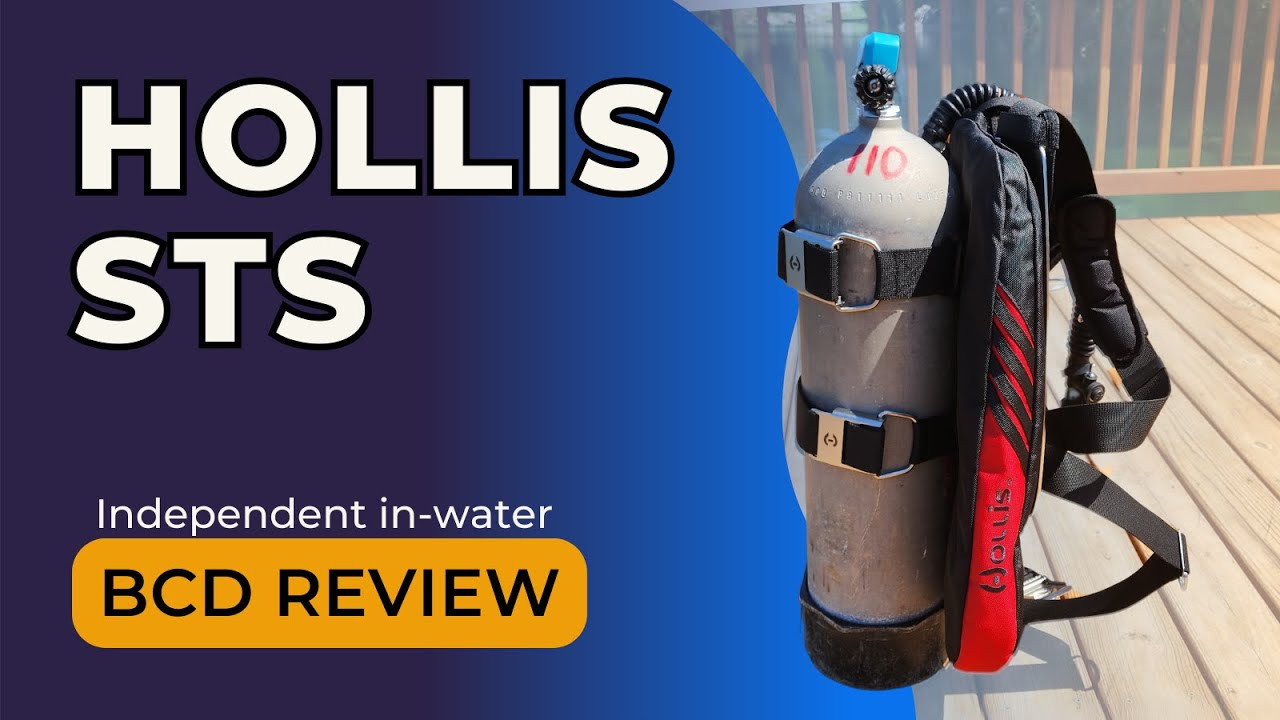
I don’t often get exactly what I was expecting when it comes to testing gear, but it was a little bit different when I received the Hollis STS. Being both a backplate/wing (BPW) diver and knowing that Hollis makes high-quality diving equipment I knew I could expect—and would get—a fun test run.
I’ll give you a brief rundown if you’re not familiar with BPW diving. Like the name implies, the setup comes with a backplate—the two most common being stainless steel and aluminum—and a wing, or internal bladder, encased in a nylon donut shape. These two components are held together by a harness that can either be adjustable or made of a continuous weave.
BPW setups are generally heavier than traditional jacket-style BCDs, making them difficult to travel with. The tradeoff is that you don’t need much, if any, additional weight. For instance, I can dive in a BPW with a steel tank and a 5mm wetsuit and I don’t need any additional lead.
Another benefit of diving with a BPW is greatly improved trim, as the entire setup is on your back. Thus, you don’t have any bulky pockets or a side bladder encumbering your movements. You also develop better buoyancy control, since all the air is directly behind you. There is no trapped air stuck at your sides.
When it came to testing, the STS performed exactly as I imagined. I maintained great trim and great buoyancy control. The Hollis power inflator made it easy to inject the exact amount of air that I needed into my wing. And not only did the STS perform great, it was comfortable as well.
Some, but not all, backplates are just stainless steel with wing nuts jabbing you in the back, but with the STS you don’t have to worry about that. It comes with lower and upper back pads that keep the hard metal from digging in, which means your time out of the water is just as comfortable as time in the water.
The wing has 35 pounds of lift, so it’s beefy enough to keep you secure at the surface, even with a steel tank. That does make the wing a little wider than its competitors, but this is a small complaint.
I absolutely loved the numerous D-rings for attaching gear to my specific configuration. Four of the eight come pre-bent, meaning no awkward twisting to clip gear on. And two of the eight are attached to the crotch strap, which is a great place to clip on my wet notes.
I had a blast testing the Hollis STS, and I think it’s a great setup for anybody looking to transition to BPW diving or for divers looking to upgrade their current setup.
Spec Breakdowns & Features


A bare-bones backplate/wing system, the Hollis STS is great for any diver looking to upgrade to BPW diving or one just looking for a new setup. With 35 pounds of lift, the Hollis STS has enough lift to ensure comfort while diving and stability on the surface.
Standard with eight D-rings, four of which are pre-bent, and two on the crotch strap, divers will never run out of places to attach their gear. A slight adjustment here or there, and you are on your way to carrying a stage bottle.
A little heavy at over eight pounds, the STS probably isn’t the best for travel. All things being equal however, this unit weighs just about the same as any other stainless steel backplate/wing setup.
The continuous-weave harness is great for minimalists who seek fewer fail points on their equipment, and the dual cambands ensure your tank, regardless if you’re using aluminum or steel, isn’t going anywhere.
Accessories
You may want to purchase either non-ditchable or ditchable weight pockets, especially if you plan to use the Hollis STS while wearing a drysuit, where extra weight is needed.
If you’re a drysuit diver, you understand the need for fins that lean more negative in the water. We can’t recommend the Hollis F1 fins enough to meet this need.
If you’re thinking about diving dry, or even semi-dry, Hollis has you covered. One of our highest rated semi-dry suits is the Neotek Semi-Dry.
One of our favorite masks comes from Hollis, and is highly rated. Check out our review of the Hollis M1 frameless mask.
Price/Quality Ratio


The Hollis STS costs roughly the same as its backplate/wing setup contemporaries. And those all run relatively high—not expensive, but within our high-end/luxury classification. You get what you pay for, though, and with BPW setups being high quality you will pay a little more.
What the STS costs is definitely worth it. The harness and the internal bladder will last you years, while the outer wing and stainless steel backplate will last you a lifetime.
Do we recommend the Hollis STS?


We do recommend the Hollis STS, especially if you’re looking for a high quality backplate/wing setup. Bare bones, with a continuous weave harness, divers can personalize the STS to fit their specific needs. Not a lot separates BPWs from each other, but the padding on the lower and upper back is a nice addition.
I try, sometimes with success, to convince new divers to start their diving journey in a BPW setup when they buy their first set of gear. Sometimes they balk at the cost, but what they get in exchange is better trim, more buoyancy control, and a setup that will last them for years.
Specs & Features
| Inflation | Back-inflate wing |
|---|---|
| Weight | 8.5 pounds |
| Lift capacity | 35 pounds |
| Clips/D-rings | Eight (including two on crotch strap) |
| Adjustment points | Continuous weave |
| Tank attachment | Dual cambands |
| Weight capacity | Zero: divers can purchase varying weight pockets |
 Take a moment to look at this.