


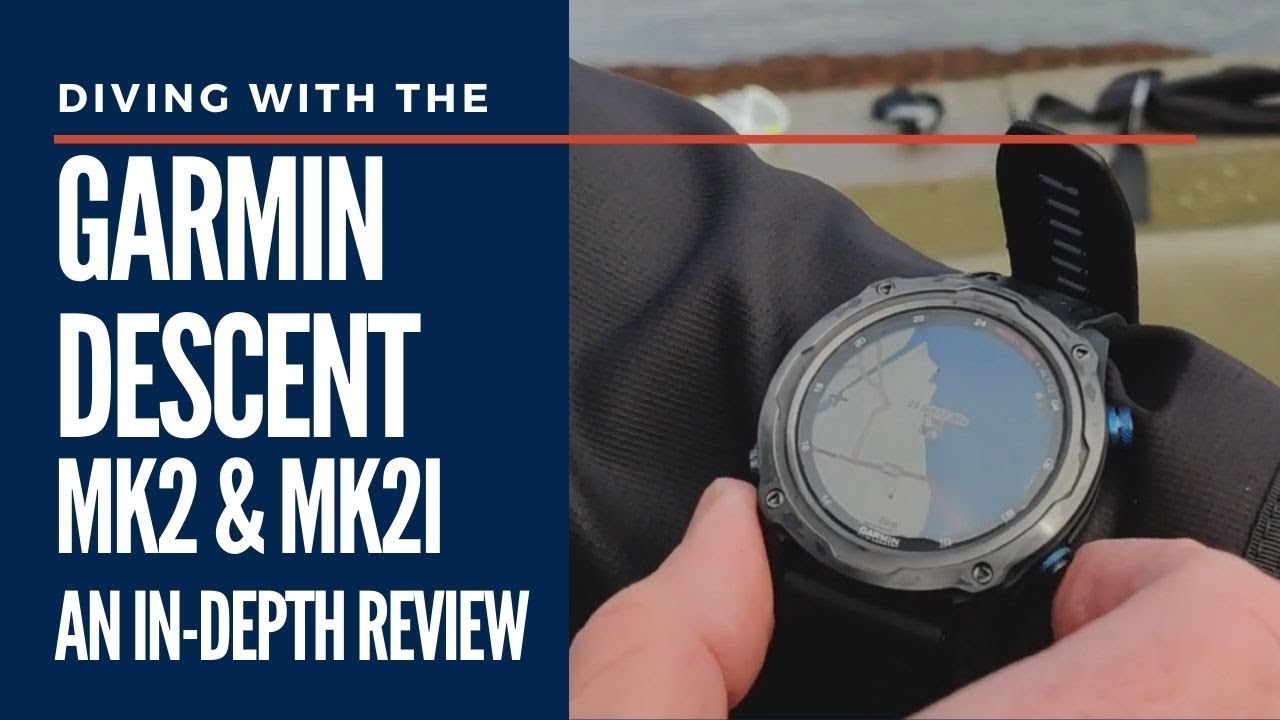


Garmin Descent Mk2i
It’s clear that Garmin has put improvements on the Mk2 that appeal more to technical divers than the first Descent provided, but this is still apparently a dive computer for primarily recreational divers. It’s limited to 100 meters, so tech divers using different gas mixtures can monitor them all, but an instructor may find it more useful to have real-time data of 4 other students plus their own at once. Of course, that will require the Mk2i and buying extra T1 transmitters which will go on sale sometime closer to New Year’s.

Beyond the air integration feature with SubWave technology that only the Mk2i has, the only other difference is that it has a titanium bezel and backplate, whereas the Mk has stainless steel.
Like the Mark 1 apnea diving and closed-circuit rebreather-modes are available on an even-better 1.4 inch display. With the Garmin Dive app finding dive spots with entry/exit points is useful, as is the preloaded dive data for wrecks reefs and tide data. Just look on the app for a new spot, mark it and your Mk2 will show you the way.
As a dive computer and smartwatch, the suite of apps (Garmin Dive, Garmin Connect, Garmin Golf, Garmin Explore and Garmin IQ) demonstrate its applications topside as a multisport GPS watch, the likes of which they have been making with a lot of success over the years (check out the Fenix series).

Of the available apps for topside activities, the addition of color maps for over 42,000 golf courses worldwide is impressive and appeals to a leisure segment, while runners, hikers and climbers will appreciate the altimeter, as they did on the Mk1.
New on the Mark 2 is the ability to store and listen to music, and having all the smartwatch features like an NFC pay system (Garmin Pay), a pulse oximeter to measure blood oxygen levels and telephone notifications (call, text and calendar) make this a truly exciting cross-over.
The display is a third bigger than the Mk1, having a screen size to show all these activities. And yet, the new Descent is not bulky to have on. Quite the contrary.

With a solid battery life (16 days in smartwatch mode, up to 80 hours in dive mode or 32 when paired with the T1) and assuming the SubWave ecosystem lives up to the hype, the Mark 2 seems to have provided a wristwatch unlike anything else on the market, save its predecessor.
Take it on an expedition with the GPS running up to 35 days; go running with music playing for 15 hours (if you’re an ultra runner, for example); or go diving for a whole weekend without ever having to take it off for recharging.
Let’s recap Garmin’s latest splash by examining their first foray into diving with the Descent Mark 1.
Where the Mk1 Shined

The Descent took the idea of a wrist-worn dive computer to truly bridge the gap to something that was also a smartwatch with everyday applications like health tracking. The touchscreen user interface is much more akin to a smartwatch than to the sometimes clunky layout of a dive computer. Impressive battery length and all the other features you would expect to find in fitness-based smartwatch
Despite all of its other features, the Descent is still a dive computer at heart. Between such features as the built-in plan mode, adjustable salinity settings, automatic altitude adjustment, and compatibility with up to six gasses in a single tank, the Mk1 is one of the most well-rounded contenders in the dive computer market.
In spite of its achievements as a reliable computer, the biggest highlight of the Mk1 is its navigational capabilities. Both underwater and on the surface, the Descent functions up the hard-won Garmin standard. This should come as no surprise given their legacy as a leader in wearable GPS.
The Descent Mk1 was a modest success, impressive given that it was Garmin’s first attempt at making a dive computer. But it wasn’t without criticism. Rumors abound that Garmin considered feedback from expert divers very seriously, that is now brilliantly reflected in the recently released Mk2 and Mk2i.

Specs & Features
| Color | Black |
|---|---|
| Display type | Color display. Memory-in-pixel (MIP) |
| Display size | 1.4 inches (35mm) |
| Screen resolution | 280 x280 |
| Battery | Rechargeable. 16 days in smartwatch mode |
| Computer size | 2.05 × 2.05 × 0.71 inches( 5.2 x 5.2 x 1.8 cm) |
| Depth rating | 330 feet (100m) |
| Number of gasses | 11 deco and/or backup gasses |
| Dive modes | air, nitrox, trimix, gauge, apnea, apnea hunt, freedive |
| Alarms | visual and audible |
| Dive log capabilities | Up to 200 dives with sharing via the Garmin Dive app |
| Transmitter compatible | yes |
| Weight | 3.51oz (99.6g) with silicone strap |
| Number of buttons | five |
| Compass | yes |
| Wrist straps | black silicone or titanium |
 Take a moment to look at this.



I currently have a Suunto D4i but while I’m working it significantly cuts my dives short (routinely have to leave a dive with 1200+ psi in my tank on nitrox). I know Suuntos are one of the most conservative on the market and I’m looking for a much more liberal computer. How does this shape up on the scale from most liberal to most conservative?
Hi
can you clarify please on the reasons not to buy? first time amateur open water diver here !
Hi Tomin. You should consider whether you want a sports watch or a dive computer when reading this: The first reason might be, because it’s a heck of a lot of a machine at a higher price. It has amazing applications in so many different areas of active living, including for health, but it costs quite a bit. So, for a first time diver who doesn’t need the technical aspects of this watch (nitrox, etc) other options might be more compelling. on the other hand, if you’ve contracted the diving bug and have your sight set on serial scuba diving, you won’t be disappointed with what the Mk2 & Mk2i can do. On top of that, it’s great for freediving and almost any other sport on land and water. It also has health advantages. We’re currently testing the Apple Ultra which does similar things but has the Apple ecosystem involved.
The second reason would be the size. If you’re planning on using it as an everyday watch, and the battery makes it less charging-dependent than Apple’s, then it can seem really big. That size makes the screen nice to read under the water, but it has a bigger footprint on your wrist.
So, consider if you want to invest in it based on your appetite for diving. Otherwise, the Mk2s and G1 Solar are worth looking at. The G1 is prefered by some members of our team because it’s less bulky and more typical watch like.